A DIY jellyfish costume can start with a clear umbrella, lightweight ribbons and a few inexpensive supplies. The umbrella becomes the jellyfish bell, while hanging strips create flowing tentacles. This guide explains a practical no-sew version, an optional light-up variation and a hands-free hat alternative. Choose the version that fits the event, weather and wearer’s comfort.
Materials for a DIY Jellyfish Costume
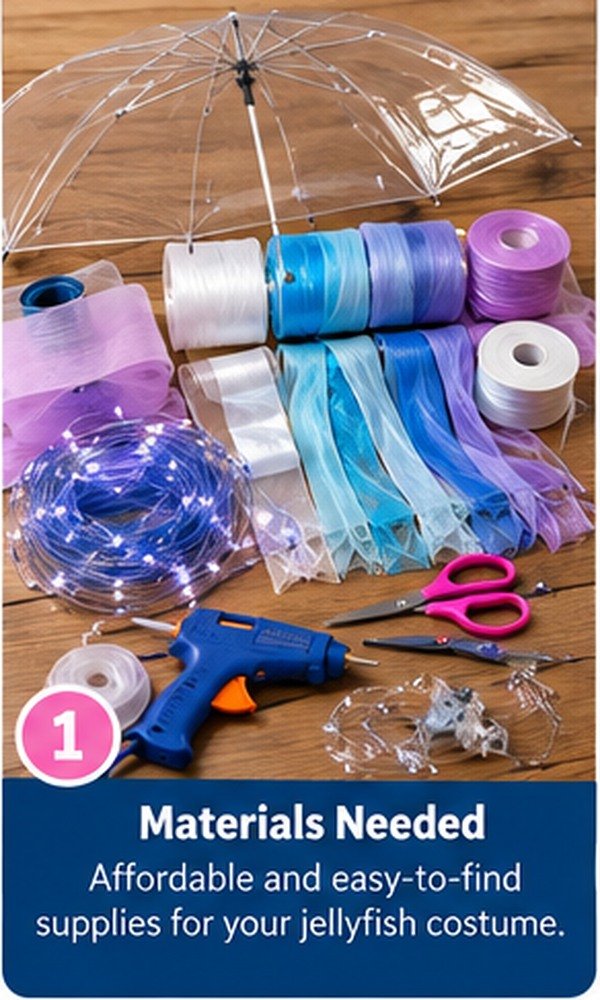
Gather a clear, preferably dome-shaped umbrella; lightweight tulle, organza or satin ribbons in two or three colors; removable tape or small hook-and-loop fasteners; blunt scissors; and a simple outfit in blue, lavender, white or pink. For a light-up version, add a short battery-powered LED string with a secure battery compartment. An adult should handle cutting and any adhesive work for children’s costumes.
Measure the umbrella’s rim before cutting the tentacles. Make most ribbons short enough to stay above the wearer’s ankles, and keep them clear of the face, hands and umbrella opening mechanism. Vary the lengths slightly for a natural underwater effect, but avoid long loops that can catch on objects.
How to Make a Jellyfish Costume With an Umbrella
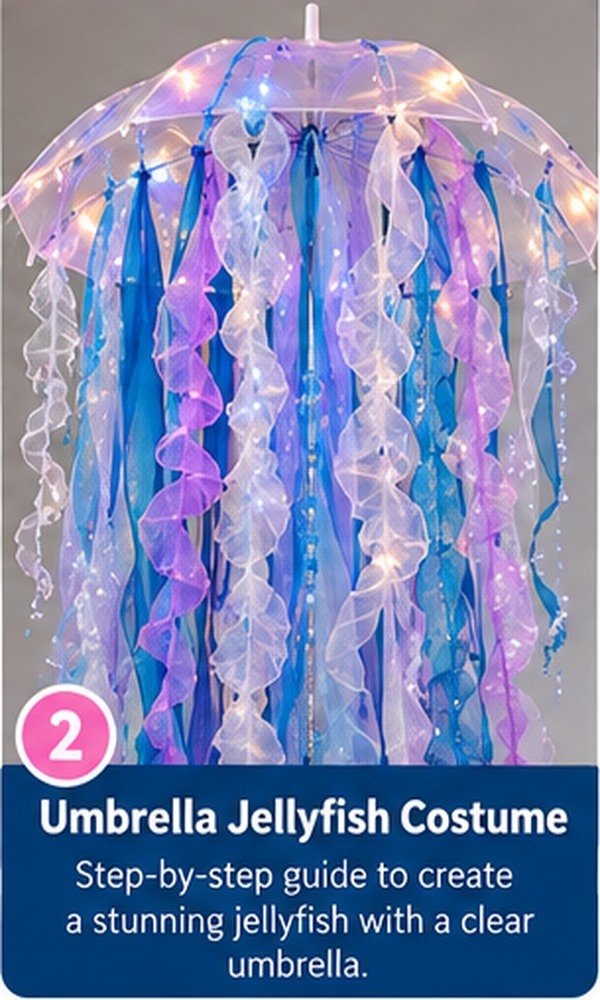
Step 1: Prepare the jellyfish bell
Open the clear umbrella fully and check that the spokes, tips and handle are secure. Wipe the canopy dry. A transparent umbrella works particularly well because it lets light pass through and keeps the costume recognizable without hiding the wearer’s face.
Step 2: Cut and arrange the tentacles
Cut strips of tulle and ribbon in different widths. Lay them around the umbrella rim before attaching anything. Alternate translucent and opaque pieces to add depth. Use light materials so the umbrella does not become difficult to carry.
Step 3: Attach without damaging the umbrella
Fasten each strip to a safe attachment point near the rim using removable tape or small ties around suitable fabric loops. Avoid sharp pins, exposed wire, and anything that could interfere with the ribs or folding mechanism. Tug each strip gently to check it is secure.
Step 4: Test the costume while walking
Walk through a doorway and turn slowly. Trim any tentacles that drag, tangle or block vision. Remember that an open umbrella takes up more room than an ordinary costume, so it may be unsuitable for tightly packed indoor parties.
How to Make a Light-Up Jellyfish Costume
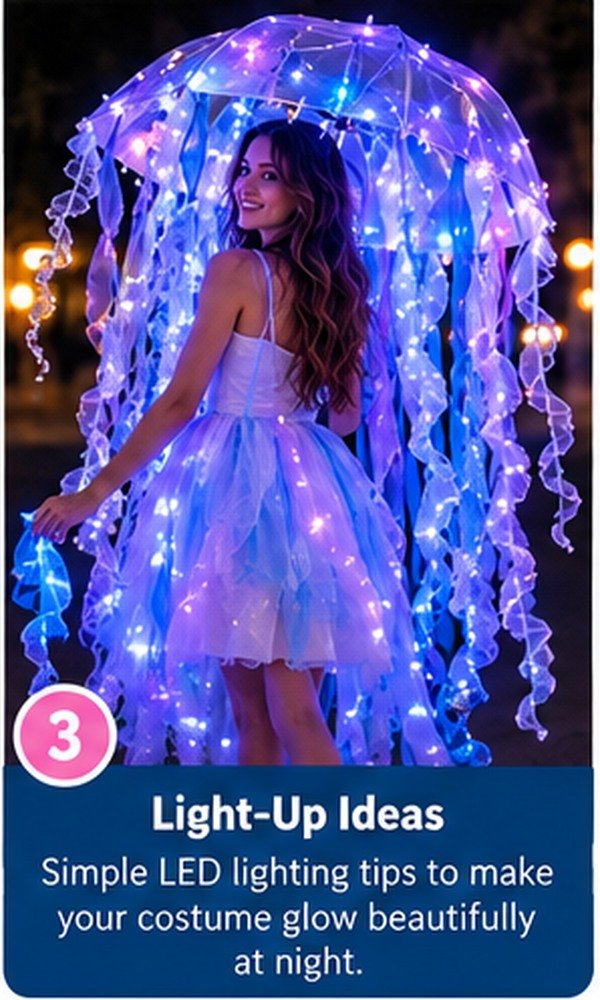
For a light up jellyfish costume, place a short, low-heat, battery-powered LED strand around the inside edge of the umbrella or along safe attachment points. Choose a product intended for wearable or decorative use, follow its manufacturer’s directions and secure the battery pack so it cannot fall. Keep wiring away from moving spokes, rain and places where it can snag.
Test the lights before leaving home. Do not use mains-powered lights, damaged batteries, exposed connections or lighting that becomes hot. For children, keep coin-cell batteries inaccessible and use an adult-supervised battery compartment. Some venues restrict illuminated costumes, so check the rules in advance.
No-Sew Jellyfish Costume Without an Umbrella
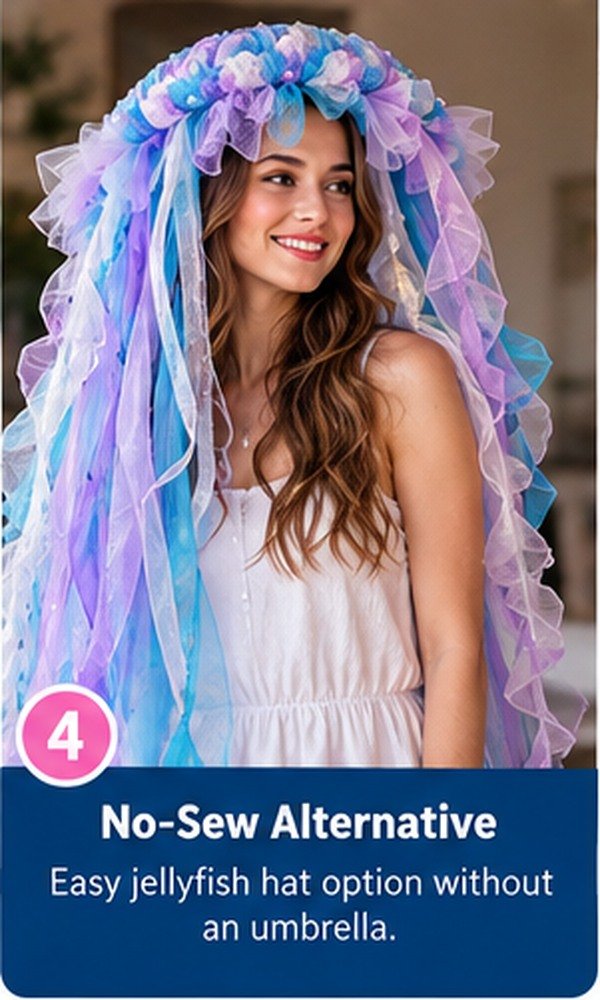
If holding an umbrella all evening sounds tiring, make a no sew jellyfish costume with a lightweight, well-fitting brimmed hat. Attach short ribbons and soft tulle around the brim using removable fasteners. Keep the tentacles outside the wearer’s field of vision and ensure the hat remains stable when moving. This hands-free variation is useful for photo sessions and parties where umbrellas are not permitted.
Do not add heavy decorations to the hat. If it slides or restricts sight, shorten the tentacles or choose a simpler headband design instead.
Jellyfish Costume Ideas for Kids and Adults
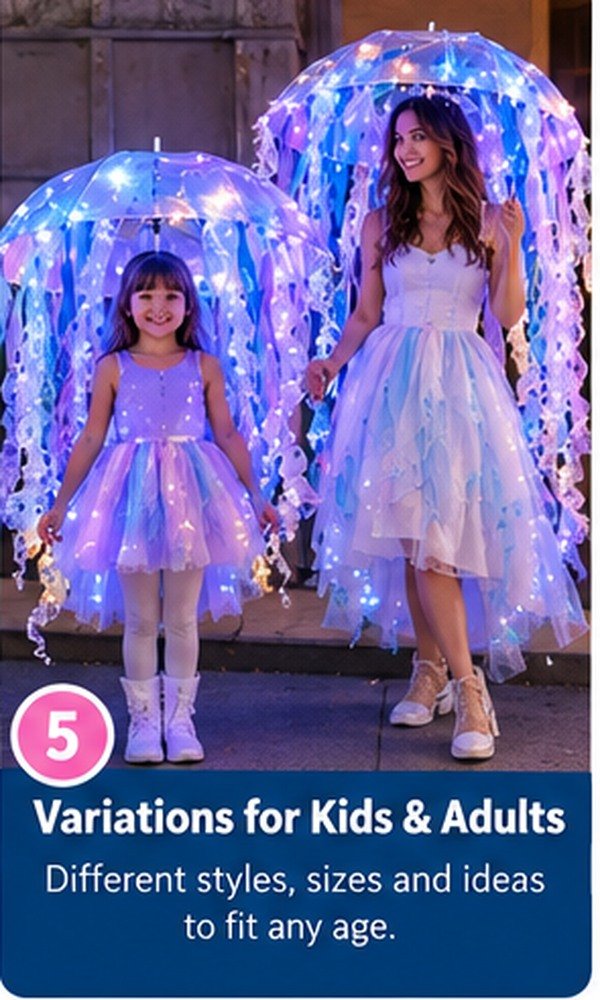
Adults can use a full-size clear umbrella with longer flowing ribbons for a dramatic silhouette. For children, keep decorations short and lightweight, and prioritize clear visibility, comfortable shoes and adult supervision. A smaller umbrella may be easier to manage, but it still needs space around other people.
Match the base outfit to the tentacle colors: pale blue for a delicate ocean look, lavender for a fantasy version, or dark clothing for glowing nighttime contrast. A simple skirt, leggings or trousers works better than bulky pieces that catch on ribbons.
Common DIY Jellyfish Costume Mistakes
- Tentacles too long: They drag on the ground or catch on furniture. Trim them before the event.
- Too many decorations: Extra weight makes the umbrella awkward to carry. Start light.
- Blocked visibility: Keep ribbons away from the eyes and face.
- Unsafe lights: Use suitable battery-powered LEDs and secure all components.
- No mobility test: Practice walking, turning and passing through doorways before leaving.
Frequently Asked Questions
Can you make a jellyfish costume without sewing?
Yes. Removable tape, hook-and-loop fasteners and carefully attached ribbons can create an umbrella or hat version without stitching.
What kind of umbrella works best?
A clear dome umbrella provides a rounded jellyfish shape and leaves the wearer’s face visible. Choose one that opens smoothly and feels comfortable to hold.
How do you make a jellyfish costume glow?
Add lightweight, low-heat battery-powered LED lights in a way that does not interfere with the umbrella mechanism. Follow the lighting manufacturer’s safety instructions.
Is an umbrella jellyfish costume suitable for a crowded party?
Not always. The umbrella and tentacles need extra space. A compact jellyfish hat is usually more practical in a crowded indoor setting.
More DIY Costume Inspiration
Explore easy Halloween costumes and DIY Halloween costumes for adults for more budget-friendly outfit ideas.
A successful DIY jellyfish costume should be light, easy to move in and recognizable at a glance. Start with the basic umbrella version, test it for comfort and add lighting only if the venue and conditions make it safe.