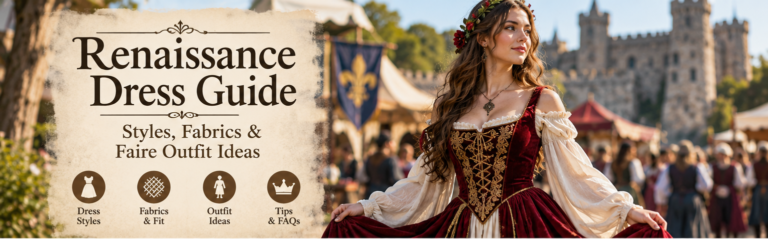
A Renaissance wedding dress can feel romantic and dramatic without sacrificing comfort. From woodland-inspired bridal gowns to formal noble-style silhouettes, the best choice combines a clear visual theme with fabrics, fit and accessories suited to the actual ceremony. This guide explains the main options and practical details to check before buying or commissioning a gown.
What Makes a Renaissance Wedding Dress?
A Renaissance wedding dress is usually a modern bridal gown inspired by clothing associated with European Renaissance eras. The term covers historically informed garments, fantasy gowns and contemporary wedding dresses with period-inspired details. A square neckline, fitted bodice, full skirt or statement sleeves can create the look, but no single silhouette represents every place or decade. A historically accurate recreation requires research into a particular region, period and social setting. For most themed weddings, comfort, venue and personal style matter more than strict authenticity.
Choose Your Bridal Style
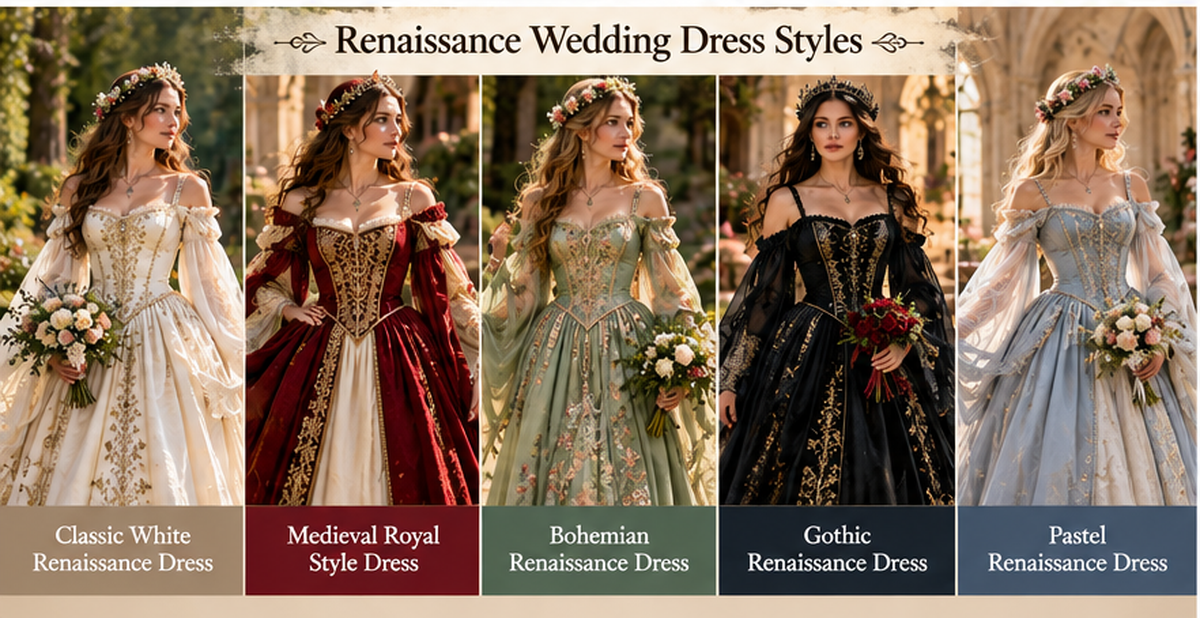
The right style starts with the mood of the ceremony. A woodland wedding can suit soft layers and a flowing silhouette, while a formal indoor event may call for richer textiles and a more structured gown. Avoid choosing a dress from photographs alone: the weight, movement and lining affect how it feels over several hours.
1. Romantic Lace-Up Gown
A lace-up bodice paired with a flowing skirt creates an approachable Renaissance-inspired bridal look. Modern lacing can allow some adjustment, but it should never be tightened so much that sitting or breathing becomes uncomfortable. A light chemise-inspired underlayer or softly gathered sleeves can add visual depth. Check whether the lacing is functional or decorative before ordering.
2. Noble-Inspired Formal Gown
For a grand ceremony, look for a fitted upper garment, generous skirt and carefully chosen trim. Velvet, brocade-look fabrics and decorative sleeves can make a strong impression. However, these features may add weight and warmth. If the wedding is outdoors or in summer, consider using the richer fabric only as a detachable overdress, jacket or accent rather than throughout the gown.
3. Woodland and Fantasy Bridal Dress
A woodland-inspired gown can use airy sleeves, floral details and soft natural colors. Ivory, sage, champagne and muted rose can all suit a romantic theme; white is not required for a Renaissance-inspired look. This style is more fantasy than historical reconstruction, which is perfectly appropriate for a creative wedding. Keep vines, ribbons and skirt hems secure so they do not catch on chairs or pathways.
4. Simple Renaissance-Inspired Wedding Dress
An understated gown with a square neckline, modest sleeve detail and an easy-moving skirt may work especially well for an intimate ceremony. A simple dress is also easier to restyle with a veil, belt, cape or jewelry. Focus on tailoring and fabric quality rather than adding too many decorative elements.
Best Fabrics for a Renaissance Wedding Dress
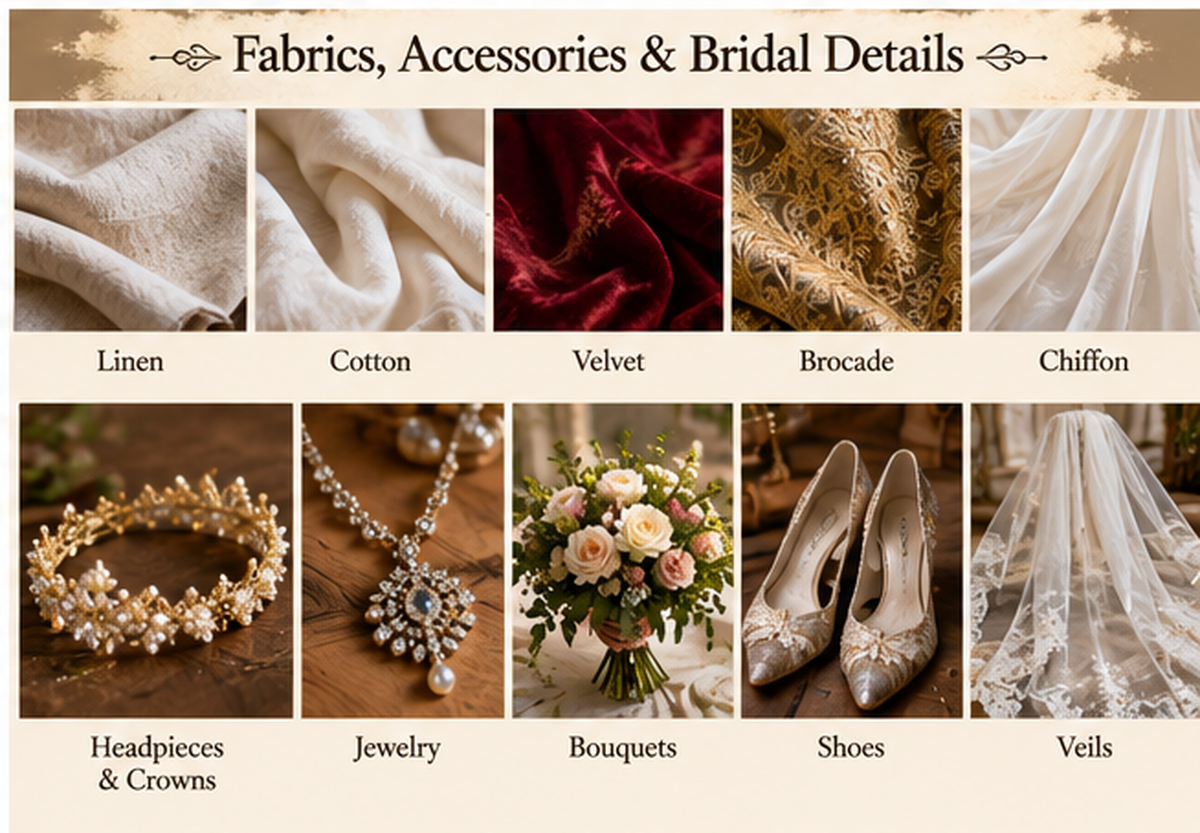
Linen and cotton blends can work for relaxed daytime celebrations, depending on weave, lining and finish. Silk and silk-look fabrics offer drape and a dressier appearance but require attention to care and cost. Velvet looks luxurious in cooler weather but can become hot. Chiffon and tulle add lightness to fantasy styles, although delicate layers may snag. Ask for fabric samples where possible and inspect the lining, not just the outer material.
How to Choose a Color
Ivory and cream are familiar bridal choices, but a themed wedding can also accommodate gold, burgundy, forest green or dusty blue. Match the color to the setting and lighting: deep velvet tones can appear nearly black in dim photographs, while very pale fabric may look transparent in bright sunlight. Order swatches and view them indoors and outdoors before making a final decision.
Fit, Measurements and Alterations
Measure bust, natural waist, hips, shoulder width and the desired length while wearing the undergarments and shoes planned for the ceremony. Compare your measurements with the seller’s garment chart rather than your everyday dress size. Check arm movement, sitting, stairs and dancing during fittings. If the gown has a train, plan a bustle, wrist loop or detachable option. Schedule alterations early enough for a final fitting close to the wedding date.
Accessories That Complete the Look
A simple veil, circlet, floral crown or carefully chosen hair jewelry can establish the bridal theme. A belt or embroidered sash can define the waist without requiring a heavily structured bodice. Choose footwear that suits the venue: low heels or supportive flats are often more practical for lawns, stone paths and long receptions. Keep accessories balanced so the gown remains the focal point.
Outdoor, Indoor and Seasonal Wedding Considerations
For outdoor weddings, consider ground conditions, temperature, wind and the length of the ceremony. Long sleeves and velvet may be comfortable in autumn but less suitable for summer. Lightweight layers can work in warm weather, while a cloak or shawl adds flexibility for cooler evenings. Indoor ceremonies offer more control over temperature but may include narrow aisles or staircases. Walk through the venue in shoes similar to your wedding pair before finalizing hem length.
Buying Online or Having a Dress Made
Before ordering, check the seller’s measurement instructions, fabric composition, shipping estimates, customization policies and return conditions. Custom garments often have different cancellation rules from ready-to-wear dresses. Ask for clear photographs of seams, closures and lining. For a commissioned gown, agree on a design sketch, materials, fittings and delivery milestones in writing. Allow a buffer for delays or adjustments instead of ordering close to the ceremony.
Bridal Outfit Ideas for Different Budgets
For a modest budget, begin with a well-fitting plain gown and add one or two distinctive accessories such as a sash and circlet. For a midrange outfit, prioritize fabric quality and professional alterations before expensive embellishments. For a more elaborate look, invest in tailoring, structured layers and a detachable train or cape. A carefully fitted simple dress will usually feel more polished than an ornate dress that restricts movement.
Common Mistakes to Avoid
Avoid buying solely by the product title ‘Renaissance,’ assuming every gown is historically accurate, or ignoring the weather and venue. Do not choose a dress without testing sitting and walking. Remember that heavily decorated sleeves can interfere with dining, candles and table settings. Check cleaning instructions and arrange a safe place to store the dress before and after the wedding.
Frequently Asked Questions
Can a Renaissance wedding dress be white?
Yes. White and ivory work well for modern Renaissance-inspired bridal styling, although historical wedding clothing did not follow one universal color tradition.
Do I need a corset?
No. Many modern gowns use comfortable fitted bodices or adjustable lacing without a separate corset.
What shoes should I wear?
Choose supportive shoes suitable for the ceremony location and test them with the gown’s hem length.
Is a Renaissance wedding dress the same as a medieval wedding dress?
Not necessarily. Retail labels often blend medieval, Renaissance and fantasy details. Historical accuracy requires a specific time and place.
Can I wear this style at a non-themed wedding?
Absolutely. A square neckline, flowing sleeves or subtle embroidery can reference the style without making the event fully themed.
Final Bridal Checklist
Before buying or commissioning a gown, confirm the silhouette, measurements, fabric, lining, alterations timeline, venue conditions, footwear, accessories and cleaning requirements. Try the complete outfit together, including any veil or cloak. For a broader overview of everyday fair styles, explore our Renaissance dress guide. For more casual event inspiration, see Renaissance fair outfit ideas.