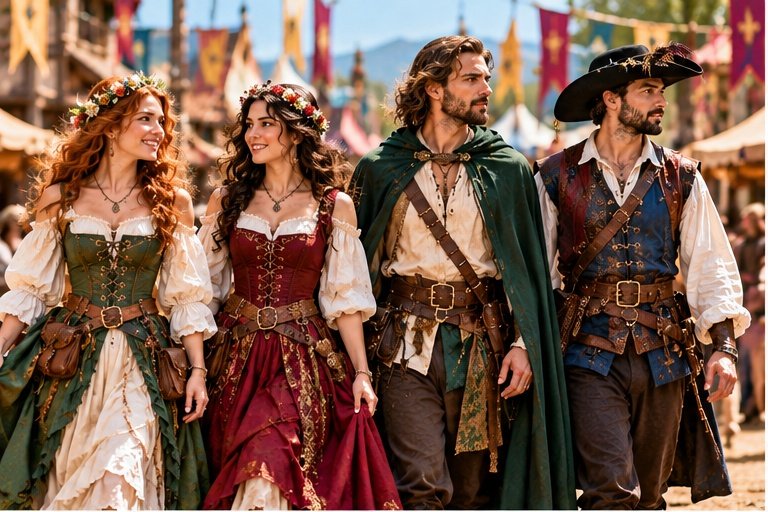
A great Renaissance costume should look intentional without making a full day at the faire uncomfortable. These Renaissance faire costumes focus on recognizable character styles you can build with coordinated clothing, useful accessories, and practical footwear.
This guide is costume-focused rather than a general what-to-wear guide. If you are mainly deciding what clothing is comfortable for your first visit, see our Renaissance fair outfits guide. Here, we will concentrate on complete costume concepts and the pieces that make each character readable.
How to Choose a Renaissance Faire Costume
Start with a character direction before buying individual pieces. A peasant, noble, merchant, ranger, pirate, fairy, healer, and jester all use different silhouettes and accessories. Choosing the character first helps you avoid a costume that feels like unrelated pieces collected from several themes.
Then build in three layers: a comfortable base, one character-defining garment, and two or three supporting details. You rarely need every possible accessory.
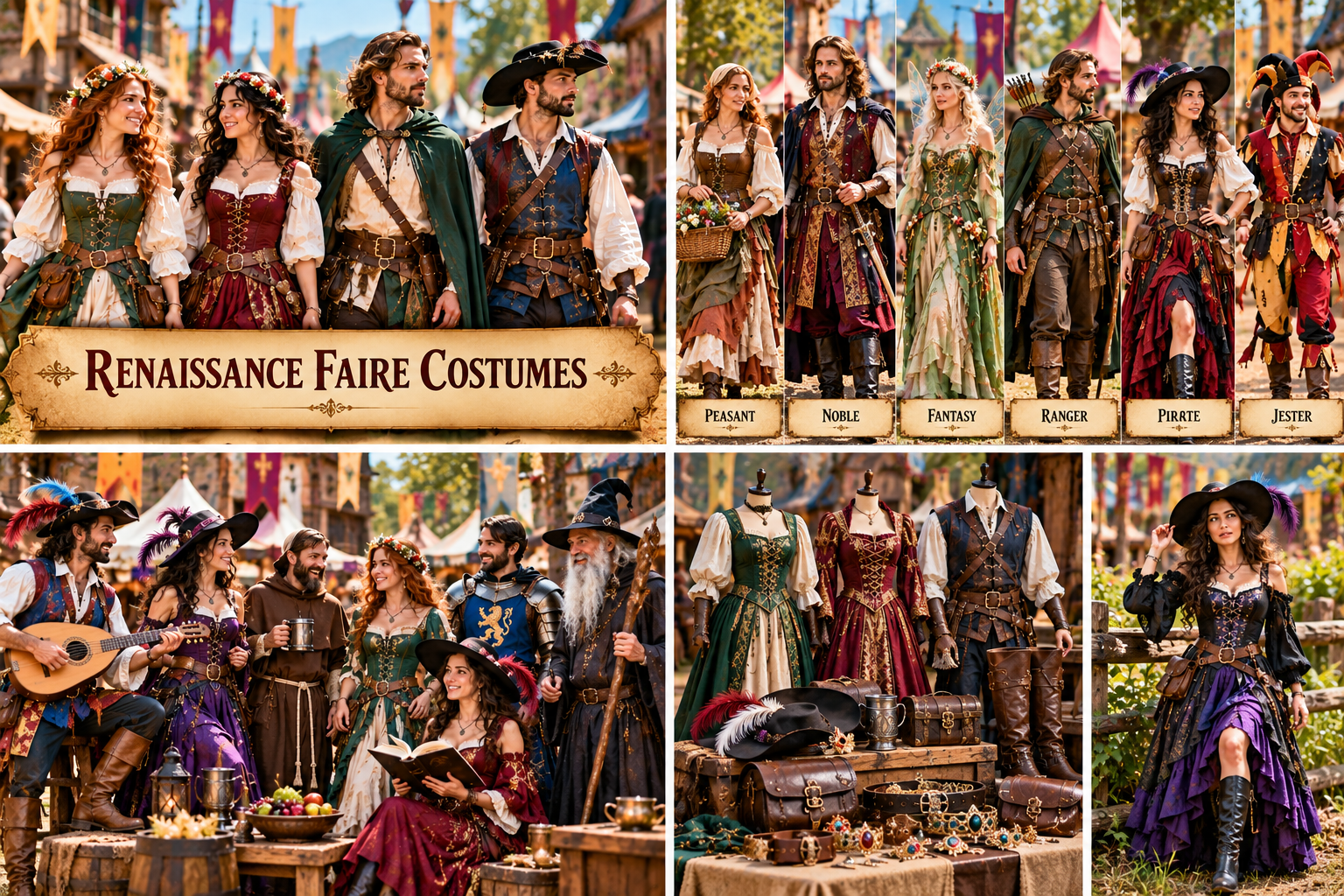
Renaissance Faire Costume Ideas
1. Village Peasant
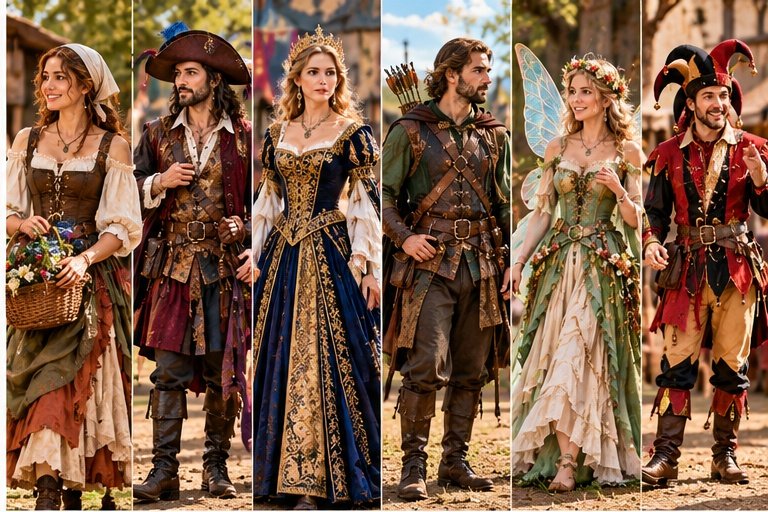
Use a loose cream shirt or chemise with an earth-tone skirt or relaxed trousers. Add a simple bodice or vest, leather-look belt, small pouch, and sturdy boots. Slightly imperfect textures and muted colors suit the practical village character.
2. Traveling Merchant
Build this costume around a shirt, vest, trousers or layered skirt, and a belt with a practical pouch. Add a brimmed hat, fabric satchel, or small ledger-style prop to suggest someone moving between market towns.
3. Renaissance Noble
Choose richer colors and more structured layers. A long gown with decorative sleeves works for one interpretation, while a shirt, doublet-style vest, trousers, and cloak works for another. Jewelry or a decorative headpiece can finish the look without overloading it.
4. Woodland Ranger
Combine olive, brown, cream, and dark green layers. A tunic or loose shirt, fitted vest, belt, hooded cloak, trousers, and boots create an adventurous woodland silhouette. Keep any costume props lightweight and follow the faire’s prop rules.
5. Village Healer
Start with a modest blouse, chemise, or tunic and add an apron, long skirt or trousers, belt pouch, and small fabric satchel. Dried-flower-inspired accessories or simple botanical details can communicate the character without needing elaborate props.
6. Court Musician
Use coordinated but slightly brighter clothing than a village costume: a flowing shirt, vest, fitted trousers or layered skirt, sash, and decorative hat. A prop instrument should only be used when the event allows it and when it is easy to carry safely.
7. Tavern Keeper
A rolled-sleeve shirt or blouse, apron, vest or bodice, practical skirt or trousers, belt, and pouch make this costume easy to recognize. Choose washable, comfortable layers if you expect a hot day.
8. Scholar or Scribe
Choose a long tunic, robe-inspired outer layer, belt, and simple satchel. Muted brown, navy, burgundy, or charcoal tones work well. A small notebook can act as both a useful item and a character detail.

9. Renaissance Pirate
Build around a loose shirt, fitted vest, sash, dark trousers or layered skirt, boots, and headscarf or broad hat. Keep the styling Renaissance-inspired rather than copying a recognizable movie character.
10. Forest Herbalist
Use natural colors, layered fabrics, a belt pouch, apron or overskirt, and botanical accessories. A hooded shawl or cloak can add depth while also providing a useful layer when temperatures drop.
11. Fantasy Fairy
Start with a wearable Renaissance-inspired dress, blouse-and-skirt combination, or tunic base, then introduce woodland details such as floral accessories, soft metallic jewelry, leaf motifs, or lightweight wings if the venue permits them.
12. Royal Court Attendant
Choose coordinated jewel tones, a structured bodice or vest, neat sleeves, and refined accessories. The goal is polished court styling without the weight and complexity of a full noble costume.
13. Medieval-Inspired Traveler
A tunic, relaxed trousers, belt, cloak, boots, and cross-body satchel create a versatile traveler character. This is especially useful if you want a costume that looks themed but remains practical for long walking distances.
14. Village Baker
Pair a blouse or loose shirt with an apron, skirt or trousers, simple vest, and head covering. Small flour-sack-inspired details or a cloth basket can support the theme without turning the costume into a bulky prop setup.
15. Court Jester
Use contrasting colors, patterned fabric, fitted trousers or a layered skirt, and playful accessories. You can suggest the character through color blocking and a distinctive hat rather than relying on an exaggerated costume.
16. Castle Guard
Start with a dark tunic, trousers, boots, belt, and simple tabard-style outer layer. For comfort and safety, use lightweight costume materials rather than heavy armor, and always follow event rules for prop weapons.
Renaissance Faire Costumes for Women
Women’s costumes can range from practical village clothing to elaborate court-inspired styles. A chemise and skirt can become a peasant costume with an apron and simple bodice, a noble costume with richer layers and jewelry, or a fantasy character with woodland accessories.
Rather than buying a completely different base for every character, invest in versatile pieces that can be restyled. A neutral chemise, long skirt, belt, and boots can support several costume concepts by changing the outer layer and accessories.
Renaissance Faire Costumes for Men
A loose shirt, trousers, boots, and belt form a flexible base for men’s Renaissance costumes. Add a vest for a merchant, cloak for a traveler, dark green layers for a ranger, structured outerwear for a noble, or a sash and broad hat for a pirate-inspired character.
Fit matters more than adding dozens of accessories. Clothing should allow comfortable walking, sitting, and movement while maintaining a clear silhouette.
Easy Renaissance Costumes for Beginners
Beginners can keep the costume to five pieces: a loose shirt or blouse, skirt or trousers, one outer layer, belt, and comfortable shoes. A pouch or headpiece can be the sixth piece if you want more character.
For example, a cream shirt, brown trousers, green vest, belt, and boots already reads as a merchant or villager. A cream blouse, long earth-tone skirt, simple bodice, belt, and boots creates an equally useful base.
DIY Renaissance Faire Costumes
Before buying new pieces, check your wardrobe and thrift stores for loose white or cream shirts, maxi skirts, plain vests, relaxed trousers, scarves, belts, and boots. Focus on shape and texture rather than finding items labeled specifically as Renaissance clothing.
A modern garment can work surprisingly well when modern details are visually minimized. Layering a vest over a plain shirt, adding a wide belt, or using a long skirt can change the overall silhouette without requiring complex sewing.
Costume Accessories That Actually Help
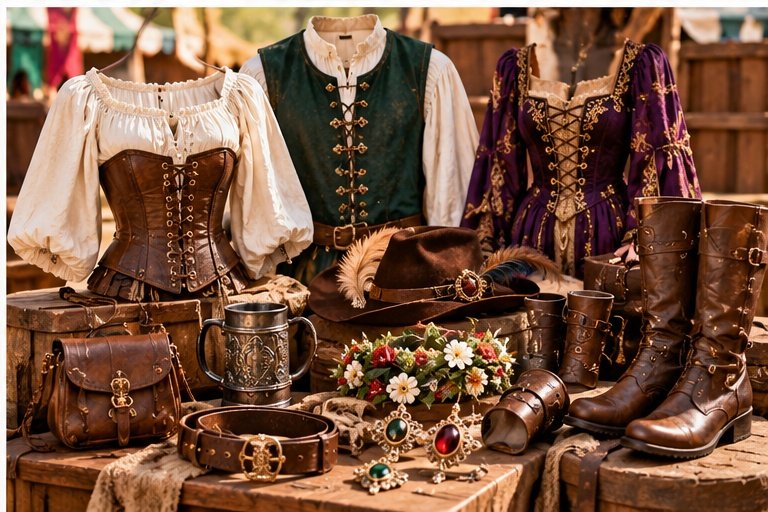
Useful accessories are better than clutter. A belt pouch carries essentials, a cloak adds warmth, a hat provides shade, and a satchel can hold larger items. Jewelry, floral headpieces, scarves, and decorative belts can add character when they match the costume’s theme.
Before bringing costume weapons, oversized wings, staffs, or other large props, check the specific Renaissance fair’s current rules.
Comfort and Safety Tips
- Wear shoes you have already tested for long walks.
- Choose breathable base layers in warm weather.
- Make tight bodices, belts, and structured pieces comfortable enough for sitting and eating.
- Use removable outer layers when temperatures may change.
- Keep long hems clear of muddy or uneven ground.
- Check event rules before bringing realistic weapons or oversized props.
How to Make a Renaissance Costume Look More Convincing
Consistency makes a bigger difference than quantity. Choose a limited color palette, repeat similar materials, and remove obviously modern details where practical. A simple costume with coordinated layers usually looks stronger than an expensive costume filled with unrelated accessories.
Think about what your character would carry. A merchant may need a pouch, a scholar a notebook, a traveler a cloak and satchel, while a noble might use jewelry and refined fabric instead. Character logic makes the styling feel deliberate.
Frequently Asked Questions
Do Renaissance faire costumes need to be historically accurate?
No. Many visitors wear Renaissance-inspired, medieval-inspired, or fantasy costumes. Historical accuracy can be a personal goal, but a comfortable coordinated costume is appropriate for many casual visitors.
What is the easiest Renaissance costume to make?
A villager or merchant is one of the easiest. Start with a loose cream shirt, relaxed brown trousers or a long skirt, a vest or bodice, belt, and comfortable boots.
Can you wear a pirate or fairy costume to a Renaissance fair?
Fantasy and pirate-inspired costumes are common at many fairs, but policies and themed weekends vary. Check the event’s official rules, especially when your costume includes large wings or props.
Can I thrift a Renaissance costume?
Yes. Loose blouses, maxi skirts, plain vests, scarves, relaxed trousers, leather-look belts, and boots can often be combined into a convincing base. Focus on coordinated shapes, fabrics, and colors.
How much should I spend on my first Renaissance costume?
There is no required amount. Starting with pieces you already own or can reuse is usually smarter than purchasing an elaborate outfit immediately. Upgrade individual pieces after you learn what is comfortable for you at an actual faire.
Final Thoughts
The best Renaissance faire costumes start with a clear character and a comfortable foundation. Pick one concept, build a coordinated base, add a defining outer layer, and finish with a few useful accessories. Whether you choose a villager, noble, ranger, merchant, pirate, or fantasy character, a cohesive costume will usually look better—and feel better—than simply adding more pieces.