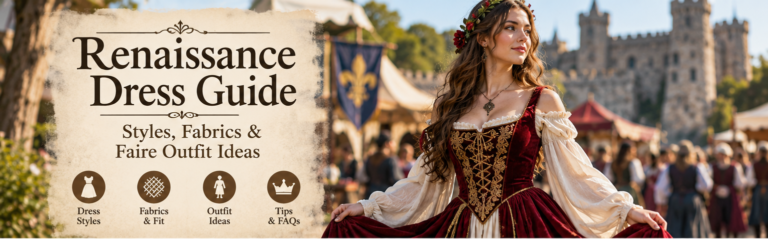
Renaissance outfits for women can be simple, practical, and comfortable while still looking beautifully suited to a faire. Start with a blouse or chemise and long skirt, then use a bodice, overdress, belt, apron, vest, or cloak to create the style you want.
You do not need a perfectly historical wardrobe. The strongest outfit usually comes from a coordinated silhouette, comfortable fabrics, and a few details that work together. Below are wearable ideas ranging from simple village looks to richer noble and fantasy-inspired outfits.
Basic Renaissance Outfit for Women
An easy base is a loose cream or white blouse with a long skirt in brown, olive, burgundy, navy, rust, or another muted shade. Add a comfortable bodice or wide belt to shape the outfit, then finish with practical footwear.
If you want more dimension, layer a second skirt, apron, shawl, vest, or lightweight cloak. Keep the layers easy to move in, especially if you expect to spend several hours walking outdoors.
1. Simple Village Renaissance Outfit
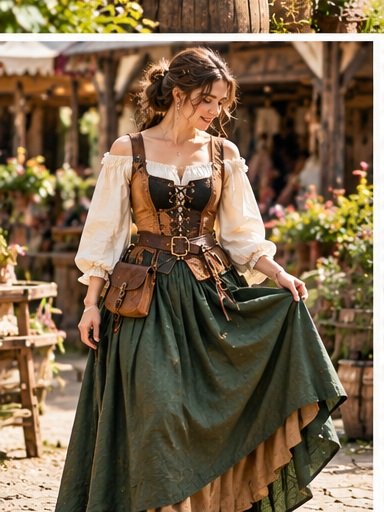
Pair a loose blouse with an ankle-length skirt, simple bodice or belt, and broken-in boots. An apron or small belt pouch adds character without making the outfit complicated.
This is one of the easiest looks to build from thrifted or everyday pieces, and it works particularly well for a first Renaissance fair.

2. Merchant or Tavern-Inspired Outfit
Use a blouse, fitted bodice, layered skirt, belt, and pouch. Deeper colors such as forest green, burgundy, navy, brown, and cream create a richer appearance while still feeling practical.
A headscarf, small hat, or simple jewelry can finish the look without requiring elaborate accessories.
3. Renaissance Noblewoman Outfit
For a more formal look, choose a structured bodice or fitted gown with fuller skirts and richer fabrics. Jewel tones, decorative trim, and carefully chosen jewelry can make the outfit feel more refined.
Keep comfort in mind when choosing structured pieces. A beautiful bodice is not useful if it makes breathing, sitting, or eating uncomfortable.
4. Woodland or Ranger-Inspired Outfit
Combine an earth-tone blouse with a practical skirt or relaxed trousers, fitted vest or bodice, belt, boots, and a lightweight hooded cloak. Forest green, brown, charcoal, rust, and cream work naturally for this style.
A cross-body pouch or satchel keeps the outfit useful while reinforcing the traveler or woodland feel.
5. Renaissance Pirate-Inspired Outfit
A loose blouse, fitted vest or bodice, layered skirt or trousers, sash, boots, and headscarf create an easy pirate-inspired look without copying a recognizable character.
Choose one or two bold details—such as a striped sash, dark vest, or wide belt—rather than loading the outfit with oversized props.
6. Fairy Renaissance Outfit
Start with a practical Renaissance-style base and add woodland or floral details. Soft green, dusty rose, cream, lavender, and muted gold work well with flower crowns, delicate jewelry, textured skirts, and light decorative layers.
If you plan to wear wings, make sure they are comfortable in crowds and allowed by the venue. A fairy-inspired outfit can still read clearly without large wings.
7. Easy Renaissance Outfit From Your Closet
A peasant-style blouse or simple loose top, maxi skirt, belt, and comfortable boots can create the foundation. Add a thrifted vest, scarf, apron, or corset-style outer layer if you want more definition.
Avoid obvious modern graphics and athletic fabrics when possible. You do not need to hide every modern element; aim for a cohesive overall impression.
8. Comfortable Plus-Size Renaissance Look
Choose breathable layers that fit comfortably rather than sizing down for a tighter costume silhouette. A flowing blouse, supportive bodice or vest, adjustable belt, full skirt, and reliable footwear can create a flattering and practical outfit.
Adjustable pieces are especially useful because they allow the outfit to move with you throughout a long day. We will cover plus-size Renaissance garb in greater depth in its own dedicated guide.
Renaissance Blouses and Chemises
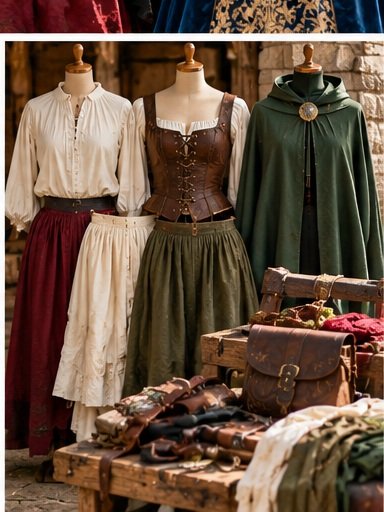
A loose blouse or chemise is one of the most versatile pieces in a women’s Renaissance wardrobe. Cream and white pair easily with almost any skirt or bodice, while muted colored blouses can create a more distinctive look.
For warm weather, prioritize breathable cotton or linen-like fabric and sleeves that can be comfortably pushed or rolled up.
Skirts, Dresses, and Layering
Long skirts create the recognizable silhouette without requiring a full costume dress. One skirt is enough for a simple outfit; two coordinated layers can add color and movement.
Keep hems practical for outdoor ground. Very long skirts may look dramatic but can become difficult on grass, gravel, stairs, or mud.
Bodices, Corset-Style Pieces, and Vests
A bodice or corset-style outer layer can define the outfit, but it should not prevent comfortable breathing or movement. Adjustable lacing is useful because you can change the fit during the day.
If structured pieces are not comfortable for you, a fitted vest or wide belt can create a similar visual effect with less restriction.
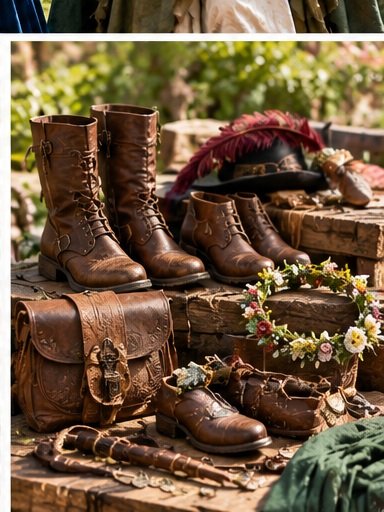
Best Shoes for Women’s Renaissance Outfits
Broken-in ankle or mid-calf boots work with many Renaissance styles, but supportive modern shoes are also fine. The faire may involve hours of walking over uneven ground, so footwear should be chosen for the actual terrain rather than appearance alone.
For broader first-visit advice about shoes, weather, and everyday clothing, see our guide to what to wear to a Renaissance fair.
Accessories That Add Character
Useful accessories include belt pouches, cross-body bags, shawls, scarves, flower crowns, hats, simple necklaces, and lightweight cloaks. Pick a few that support your chosen style instead of treating every accessory as necessary.
A small pouch or bag is particularly helpful because it can carry your phone, wallet, sunscreen, and other essentials without disrupting the outfit.
Dressing for Hot, Cool, or Rainy Weather
For hot weather, use breathable blouses, lighter skirts, fewer layers, and removable accessories. For cooler weather, add a shawl, cloak, or hidden base layer.
If rain is likely, avoid floor-length hems and delicate footwear. Choose fabrics and shoes that you will not mind getting dusty or muddy.
Common Women’s Renaissance Outfit Mistakes
- Wearing a bodice or corset-style piece that is too restrictive.
- Choosing a skirt so long that it drags over outdoor ground.
- Buying new costume boots without breaking them in.
- Wearing too many heavy layers in warm weather.
- Adding more accessories than you can comfortably carry.
- Ignoring venue rules for props, wings, or costume weapons.
Frequently Asked Questions
What should a woman wear to a Renaissance fair?
A simple choice is a loose blouse, long skirt, comfortable bodice or belt, and broken-in footwear. Add a pouch, shawl, hat, or jewelry if you want more detail.
Can I wear a maxi skirt to a Renaissance fair?
Yes. A plain maxi skirt can work very well, especially with a loose blouse and belt or bodice. Make sure the hem is short enough to handle outdoor paths safely.
Do I need to wear a corset?
No. Corsets and corset-style bodices are optional. A vest, belt, layered dress, or simple blouse-and-skirt combination can create a convincing Renaissance-inspired outfit without one.
Can women wear trousers to a Renaissance fair?
Yes. Trousers can be practical for ranger, traveler, pirate, and fantasy-inspired looks. Choose a comfortable cut and coordinate them with a blouse, vest, belt, boots, or cloak.
Where can I find more Renaissance outfit inspiration?
For broader styling ideas for women and men, see our Renaissance fair outfits guide. If you want character-based concepts, browse our Renaissance faire costumes guide.
Final Thoughts
The best women’s Renaissance outfits balance style with wearability. Start with a comfortable blouse, skirt or trousers, and reliable footwear, then add one defining layer and a few useful accessories. Whether you prefer a simple villager, refined noblewoman, woodland ranger, pirate, or fairy-inspired look, the outfit should let you comfortably enjoy the entire faire.