Planning your first Renaissance fair outfit can feel complicated, but it does not need to be historically perfect to look convincing. The best Renaissance fair outfits combine a simple period-inspired base with comfortable layers, practical shoes, and a few accessories that suit the character you want to create.
This guide shows you how to build an outfit for a full day at the faire, whether you prefer a village look, a noble-inspired outfit, a fantasy style, or something simple you can assemble from pieces you already own.
What Should You Wear to a Renaissance Fair?
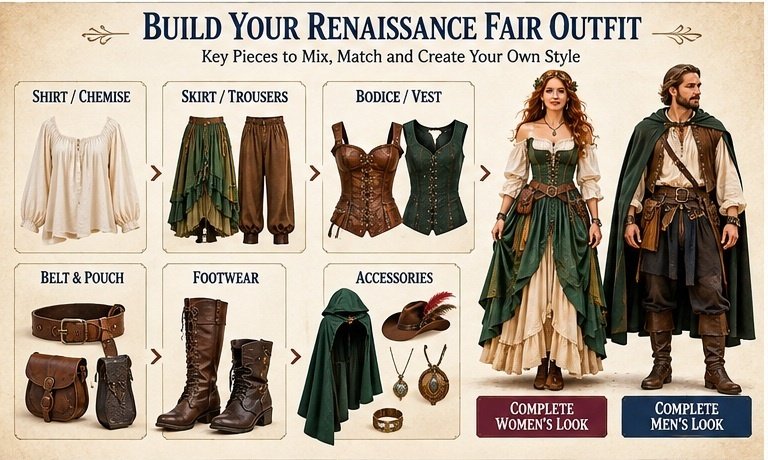
Start with comfort. Renaissance fairs often involve hours of walking, standing, eating, shopping, and watching outdoor performances. A breathable shirt or chemise with a skirt or relaxed trousers gives you an easy foundation. Add a bodice, vest, belt, pouch, cloak, or hat to make the outfit feel more intentional.
You do not need to reproduce one historical year exactly. Modern Renaissance fairs commonly mix Renaissance-inspired clothing with medieval and fantasy influences, so choose one direction and keep the pieces visually consistent.
How to Build a Renaissance Fair Outfit
1. Choose a Comfortable Base Layer
A loose shirt, tunic, chemise, blouse, or simple long dress is an easy starting point. Cotton and linen-like breathable fabrics are especially useful for warm outdoor events. Neutral shades such as cream, brown, olive, burgundy, navy, and muted green are easy to layer.
2. Add a Skirt or Relaxed Trousers
For a feminine village-inspired look, try a long skirt over a chemise or blouse. For a masculine or gender-neutral outfit, relaxed trousers with a loose shirt or tunic create a simple base that can be upgraded with a vest or belt.
3. Create Shape With a Bodice, Vest, or Doublet
A structured outer piece can quickly transform ordinary clothing into a Renaissance-inspired outfit. A bodice works well over a blouse or chemise, while a vest or doublet adds shape to a shirt-and-trousers combination. It should still allow comfortable sitting, eating, and walking.
4. Use a Belt to Tie the Look Together
A simple belt is one of the easiest finishing pieces. It visually connects the layers and can hold a small pouch for essentials. Avoid overloading it with accessories; one or two useful details usually look more intentional than many unrelated pieces.
Renaissance Fair Outfits for Women
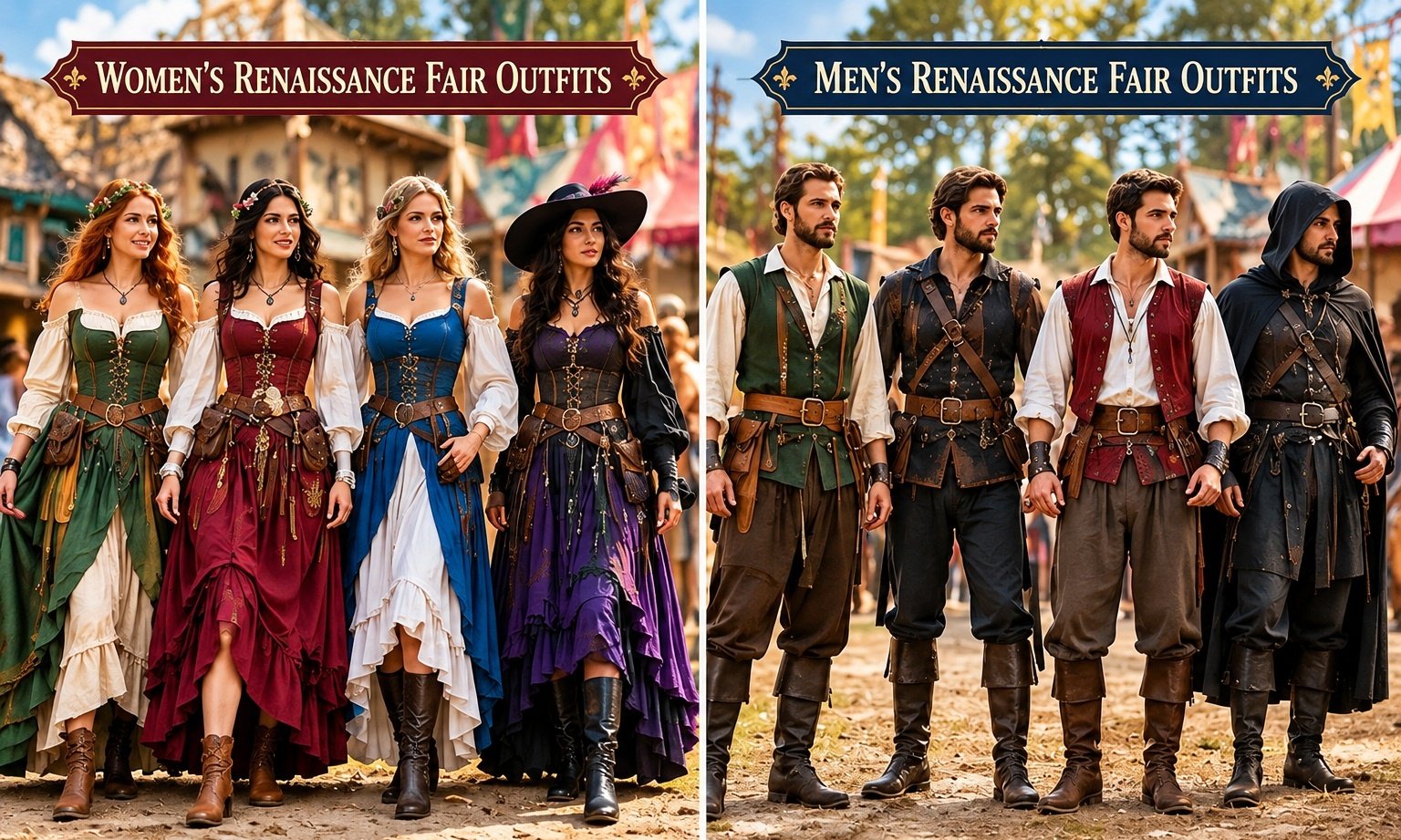
A classic women’s outfit can begin with a chemise or loose blouse, a long skirt, and a comfortable bodice. From that foundation you can move toward several styles.
Village or Peasant-Inspired Outfit
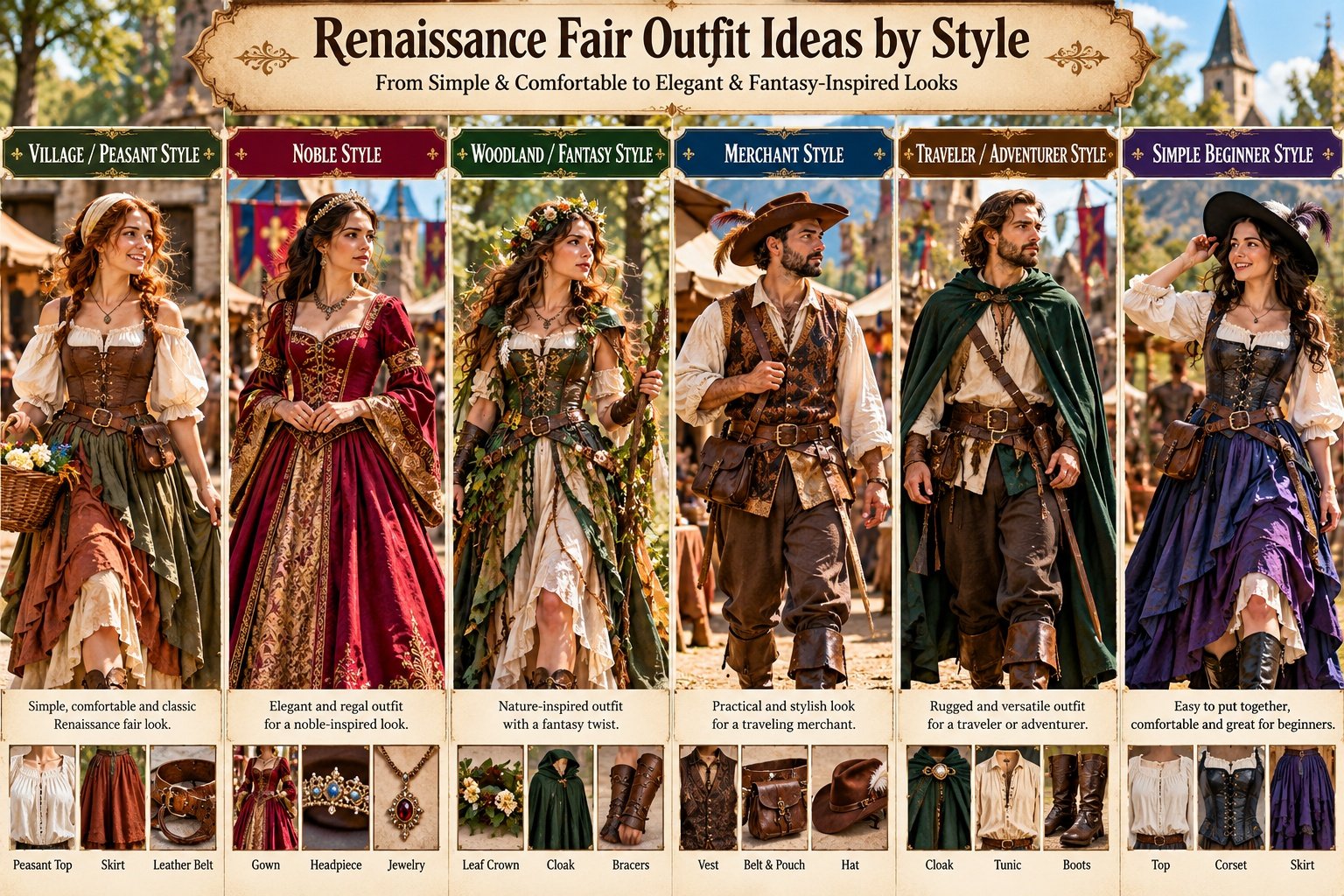
Combine a cream blouse or chemise with an earthy long skirt, simple bodice, belt, and comfortable boots. This is one of the easiest looks for a first visit because the pieces can be mixed and reused.
Noble-Inspired Outfit
Choose a long dress or layered skirt in richer colors, then add a fitted bodice, decorative sleeves, simple jewelry, and an optional cloak. Keep footwear practical even if the rest of the outfit is elaborate.
Fantasy Faire Outfit
Use the same practical base but add a fantasy detail such as a hooded layer, floral headpiece, woodland accessories, or dramatic sleeves. Building fantasy styling on top of wearable clothing helps the outfit remain comfortable throughout the day.
Renaissance Fair Outfits for Men
A straightforward men’s Renaissance fair outfit can be built from a loose shirt, relaxed trousers, a vest or doublet, belt, pouch, and boots. The same base can become a villager, merchant, traveler, ranger, or noble-inspired look depending on the outer layers.
Simple Villager Outfit
Pair a cream or muted shirt with brown or dark trousers, a belt, and sturdy footwear. Add a vest if you want more structure without adding too much heat.
Merchant or Noble-Inspired Outfit
Start with a collared or lace-up shirt and trousers, then add a more structured vest or doublet. Richer fabrics, coordinated colors, and a hat can make the outfit feel more refined.
Traveler or Fantasy Outfit
Use a tunic or loose shirt with trousers, boots, a belt pouch, and a light hooded layer. Keep costume props optional so the outfit remains easy to move in.
Easy Renaissance Fair Outfit Ideas for Beginners
If this is your first faire, avoid buying an entire wardrobe at once. These simple combinations are enough to establish the look:
- Simple village look: loose cream shirt + long skirt or brown trousers + belt + boots.
- Merchant look: shirt + dark trousers + vest + belt pouch.
- Woodland look: earth-tone dress or tunic + belt + hooded layer + practical boots.
- Noble-inspired look: long dress or shirt-and-trousers base + structured outer layer + coordinated accessories.
- Budget look: plain blouse or oversized shirt + thrifted skirt/trousers + simple belt.
What Shoes Should You Wear?
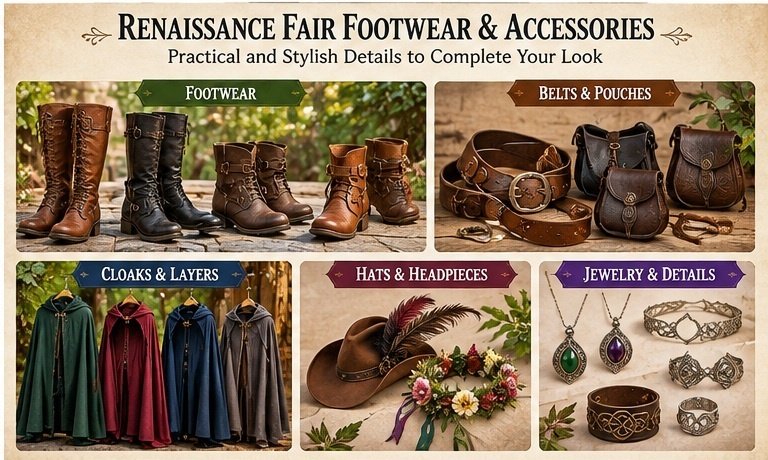
Choose footwear for the ground, not only for photographs. Faire grounds may include grass, gravel, dust, and uneven paths. Comfortable boots, simple leather-look shoes, or another supportive pair you have already worn for long periods are better than brand-new footwear that matches perfectly but causes discomfort.
If your most comfortable shoes look modern, a long skirt or trouser hem may make them less noticeable. Comfort is more valuable than sacrificing an entire day for perfect footwear.
Accessories That Make the Outfit Feel Complete
You do not need many accessories. A belt, pouch, simple jewelry, hat, scarf, cloak, or small character detail can be enough. Choose accessories that either serve a purpose or support the same character concept.
A pouch is especially useful because modern essentials such as a phone, wallet, sunscreen, and keys still need somewhere to go.
Dress for the Weather, Not Just the Theme
Outdoor conditions can change the best outfit choice. For hot weather, reduce heavy layers and prioritize breathable fabrics, shade, and hydration. In cooler conditions, add removable layers such as a cloak, shawl, vest, or jacket-inspired outer piece.
Check the forecast shortly before attending and make sure every important layer can be removed or added without ruining the outfit.
Historical vs. Fantasy Renaissance Fair Outfits
Historical-inspired outfits generally use period-style garment shapes, restrained accessories, and natural-looking fabrics. Fantasy outfits allow more imaginative elements such as woodland styling, magical characters, dramatic cloaks, and unusual accessories.
Neither approach needs to be complicated. The important part is consistency: a few pieces that clearly belong together usually create a stronger look than many unrelated costume elements.
What Not to Wear to a Renaissance Fair
Avoid anything that prevents comfortable movement, becomes dangerously hot, or requires constant adjustment. Very heavy layers can become uncomfortable in summer, while long hems may be difficult on muddy ground. Break in footwear beforehand and make sure restrictive pieces allow you to sit and breathe normally.
Renaissance Fair Outfit Checklist
- Breathable base shirt, chemise, tunic, or dress
- Comfortable skirt or trousers if needed
- Optional bodice, vest, or doublet
- Supportive, already-tested footwear
- Belt and practical pouch
- Weather-appropriate removable layer
- One or two character accessories
- Space for your phone, wallet, keys, and other essentials
Frequently Asked Questions
Do you have to dress up for a Renaissance fair?
No. Visitors can normally attend in everyday clothing. Dressing in a Renaissance-inspired outfit is an optional way to participate more deeply in the atmosphere.
Can I wear normal clothes to a Renaissance fair?
Yes. If you want a small themed touch without a complete costume, start with normal comfortable clothing and add a loose period-inspired shirt, belt, vest, skirt, or accessory.
Can I wear a fantasy costume to a Renaissance fair?
Many Renaissance fairs welcome fantasy-inspired looks, although individual events may have their own rules or themed weekends. Check the event’s official guidance before bringing costume props or unusually elaborate accessories.
What is the easiest Renaissance fair outfit?
A loose cream shirt or blouse with a long skirt or relaxed dark trousers, a belt, and comfortable boots is one of the simplest combinations. Add a vest, bodice, or pouch if you want another layer.
Should Renaissance fair clothing be historically accurate?
Not necessarily. Historical accuracy can be a rewarding goal, but most casual visitors can focus on a coordinated period-inspired or fantasy outfit that is comfortable and appropriate for the event.
Related Renaissance Faire Guides
This article focuses on building a complete, comfortable outfit from clothing layers and accessories. If you are attending your first event and mainly need help with admission-day expectations, footwear, and venue rules, read What to Wear to a Renaissance Fair. If you want specific low-cost character looks to copy, explore 15 Renaissance Faire Outfit Ideas for Beginners. For character-based inspiration, see our Renaissance Faire Costumes.
Final Thoughts
The best Renaissance fair outfits balance atmosphere with practicality. Start with comfortable clothing, add one structured layer, choose footwear you trust, and finish the look with a small number of coordinated accessories. Once you have a reliable base outfit, you can add more detailed Renaissance clothing over time instead of trying to build everything for your first visit.