A Renaissance dress can be historical-inspired, practical for a modern fair, or somewhere in between. The best choice depends on where it will be worn: a crowded outdoor Renaissance fair, a themed party, a stage performance, or a wedding. This guide explains recognizable dress styles, comfortable fabrics, sensible layering, and how to put together a complete look without confusing a modern costume with historical clothing.
What Is a Renaissance Dress?
In everyday shopping, “Renaissance dress” usually describes a dress inspired by European fashions of roughly the 15th and 16th centuries. The label covers a wide range of modern garments, from simple lace-up fair dresses to elaborate gowns with structured bodices and full skirts. Those modern designs are not necessarily faithful reconstructions. Clothing varied by region, social position, occupation, and decade, so there is no single historically correct Renaissance dress.
For a fair, prioritize a comfortable, recognizable silhouette. For a historical reenactment, research the specific region and period and consult the event’s clothing standards before buying or sewing.
Five Renaissance Dress Styles to Know

1. The simple lace-up fair dress
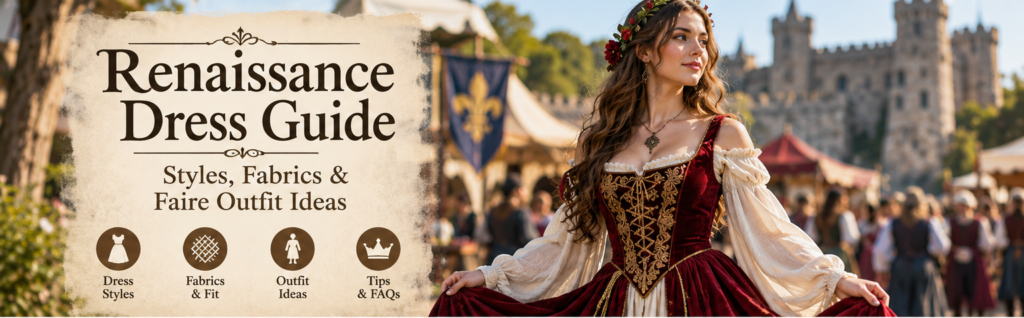
A plain skirt and lace-up overdress create an accessible fair look. Many modern versions use a front-laced bodice over a blouse or chemise. The separate pieces make it easier to adjust warmth and fit during a long event. Choose secure lacing that allows normal breathing and sitting.
2. The peasant-inspired dress
For a rustic, everyday-inspired outfit, use a relaxed linen- or cotton-look underlayer, a practical skirt, and an apron or simple waist accessory. “Peasant dress” is a broad costume description, not one precise historical pattern. Earth tones can create a cohesive look, but color alone does not determine historical authenticity.
3. The noble-inspired gown
Fuller skirts, decorated sleeves, fitted upper garments, and richer-looking textiles create a more formal impression. Modern costume gowns may borrow features from several centuries. If you want a specific historical reference, compare museum collections or reliable dress-history resources before choosing trim and accessories.
4. The fairy-tale Renaissance-inspired dress
Soft sleeves, flowing layers, botanical accessories, and delicate colors work well for fantasy festivals and themed photography. This is a creative interpretation rather than a strict historical style. Keep trailing fabric short enough to avoid being stepped on in crowded paths.
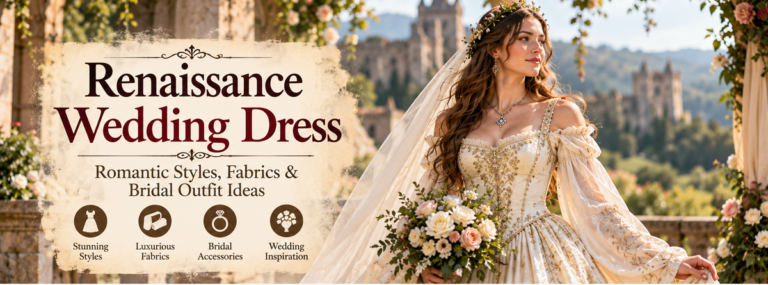
5. The wedding or formal Renaissance-inspired gown
For a themed ceremony, consider an elegant floor-length skirt, decorative sleeves, and comfortable lining. Confirm whether the venue has stairs, uneven ground, or outdoor seating. A detachable train or a hem that clears the floor may be more practical than a dramatic full-length train.
How to Choose a Renaissance Dress for a Fair
Start with the event, weather, and how much walking you expect. A fair outfit needs to function through standing, eating, browsing stalls, and sitting on benches. Try the complete outfit at home, including shoes and accessories, before the event.
- Warm weather: Consider breathable natural-fiber layers and a lighter skirt. Fiber labels matter more than marketing terms such as “linen feel.”
- Cool weather: Leave room for an additional layer and bring a shawl or outer garment.
- Busy grounds: Avoid oversized hoops, long trains, and dangling accessories that may snag.
- All-day wear: Favor adjustable closures, accessible pockets, and shoes you have already broken in.
If you’re new to these events, read our first-timer’s guide to what to wear to a Renaissance fair for a complete outfit checklist.
Fabric Guide: Cotton, Linen, Velvet and Synthetics

Fabric affects how the dress feels much more than the product photo suggests. Cotton can be comfortable and easy to care for, though weight and weave vary. Linen is often breathable and develops natural creases. Velvet creates a rich visual effect but can feel warm, especially in heavy constructions. Polyester and other synthetics vary widely; some are light and durable, while less breathable versions may be uncomfortable on hot days.
Check the full fabric composition, lining, care instructions, and garment measurements. A lightweight cotton-blend costume may be more practical for a summer fair than a heavy formal gown, even if the latter looks more impressive online.
Getting the Fit Right
Costume sizing is not standardized. Measure your bust, waist, hips, shoulder-to-waist length, and desired skirt length, then compare those measurements with the actual product’s size chart. Do not assume your usual streetwear size will transfer to a lace-up bodice.
Test whether you can sit, raise your arms, and breathe comfortably. A fitted upper garment should feel supportive without painful pressure. For separate pieces, check that the waistband and bodice do not bunch where they overlap. If ordering online, review the return policy and leave enough time for exchanges or alterations.
Renaissance Dress Accessories That Make a Difference
A simple dress can look complete with a few purposeful additions. A belt or pouch adds practicality, while a headscarf, flower crown, or modest jewelry can reinforce the chosen character. For footwear, comfortable closed-toe flats or low boots often work better than unfamiliar heels on dirt or gravel paths.
Avoid carrying realistic-looking weapons unless the event explicitly permits them, and check any costume-prop rules in advance. Choose accessories that suit the setting instead of adding everything at once.
Build Three Complete Outfits
Budget-friendly village look
Combine a plain blouse, ankle-length skirt, simple lace-up overdress or vest, belt pouch, and comfortable boots. Reuse pieces you already own where possible. The goal is a coordinated outfit, not an expensive collection of props.
Comfortable first-time fair look
Choose a breathable dress with adjustable lacing, supportive footwear, a small crossbody or belt pouch, and a light outer layer. Keep your hands free and plan for changing weather. Explore our Renaissance fair outfit guide for additional combinations.
Elegant fantasy-inspired look
Pair a flowing dress with restrained decorative trim, a soft hairstyle, and one focal accessory such as a circlet. For more outfit inspiration, see our Renaissance outfits for women.
Common Mistakes to Avoid
- Buying by labeled size instead of measurements.
- Choosing a heavy, fully lined dress for a hot outdoor event without considering comfort.
- Wearing new shoes for a full day of walking.
- Assuming a fantasy costume is an accurate reconstruction of historical dress.
- Ignoring event-specific costume and prop restrictions.
- Buying a dress without checking how it can be washed or repaired.
Frequently Asked Questions
Do I need an authentic Renaissance dress for a Renaissance fair?
Usually not for a general public visit, but individual events may have their own rules. Historical reenactment groups can have stricter clothing standards than public fairs. Check the organizer’s guidance before attending.
Can I wear a Renaissance dress without a corset?
Yes. Many modern fair dresses use adjustable bodices, elastic panels, or separate vests. A corset is not a requirement for enjoying a Renaissance-themed event.
What shoes work with a Renaissance fair dress?
Choose comfortable, stable shoes suited to the grounds. Low boots or closed-toe flats are often practical; the best choice depends on terrain and weather.
How is a Renaissance dress different from a medieval dress?
The historical periods overlap in popular costume terminology, but actual clothing styles changed substantially across regions and centuries. Modern retail labels often blend medieval, Renaissance, and fantasy features. If accuracy matters, select a specific place and date rather than relying on the product name.
What should I wear under a Renaissance dress?
It depends on the garment. A chemise or blouse may be part of the intended look, while comfortable modern undergarments and weather-appropriate layers can make the outfit easier to wear. Follow the garment’s fit and care guidance.
Final Checklist Before You Buy or Sew
Choose the occasion first, then decide how historical or fantasy-inspired you want the dress to be. Check fabric composition, measurements, closure comfort, hem length, footwear, care instructions, and the event’s rules. A thoughtful Renaissance dress outfit should look intentional and still let you enjoy the day.
For readers seeking roomier layered outfits, our existing plus-size Renaissance garb guide offers additional comfort-focused ideas.